Our Providers
 Paige Proctor, PA-CPhysician Assistant
 Christy Sorey, FNP-CNurse Practitioner
 Robyn Byrd, FNP-BCNurse Practitioner
 Samantha Marshall, FNP-BCNurse Practitioner
Book a consultation and we'll verify your insurance before your first visit.
Start Your JourneyOur providers match you to the best FDA-approved option based on your health profile.
Find Your MatchOur team helps you understand every option so you can decide with confidence.
Book NowBrowse our full library of evidence-based weight loss resources.
View All ResourcesKnow your coverage before your first visit. No surprises.
Check Your CoveragePaige Proctor, PA-CPhysician Assistant
Christy Sorey, FNP-CNurse Practitioner
Robyn Byrd, FNP-BCNurse Practitioner
Samantha Marshall, FNP-BCNurse Practitioner

The most commonly prescribed weight loss medication in the United States. An FDA-approved appetite suppressant available as an affordable generic, prescribed at PEAK as part of a clinician-managed weight loss program.
FDA-approved • Insurance accepted • Generic available
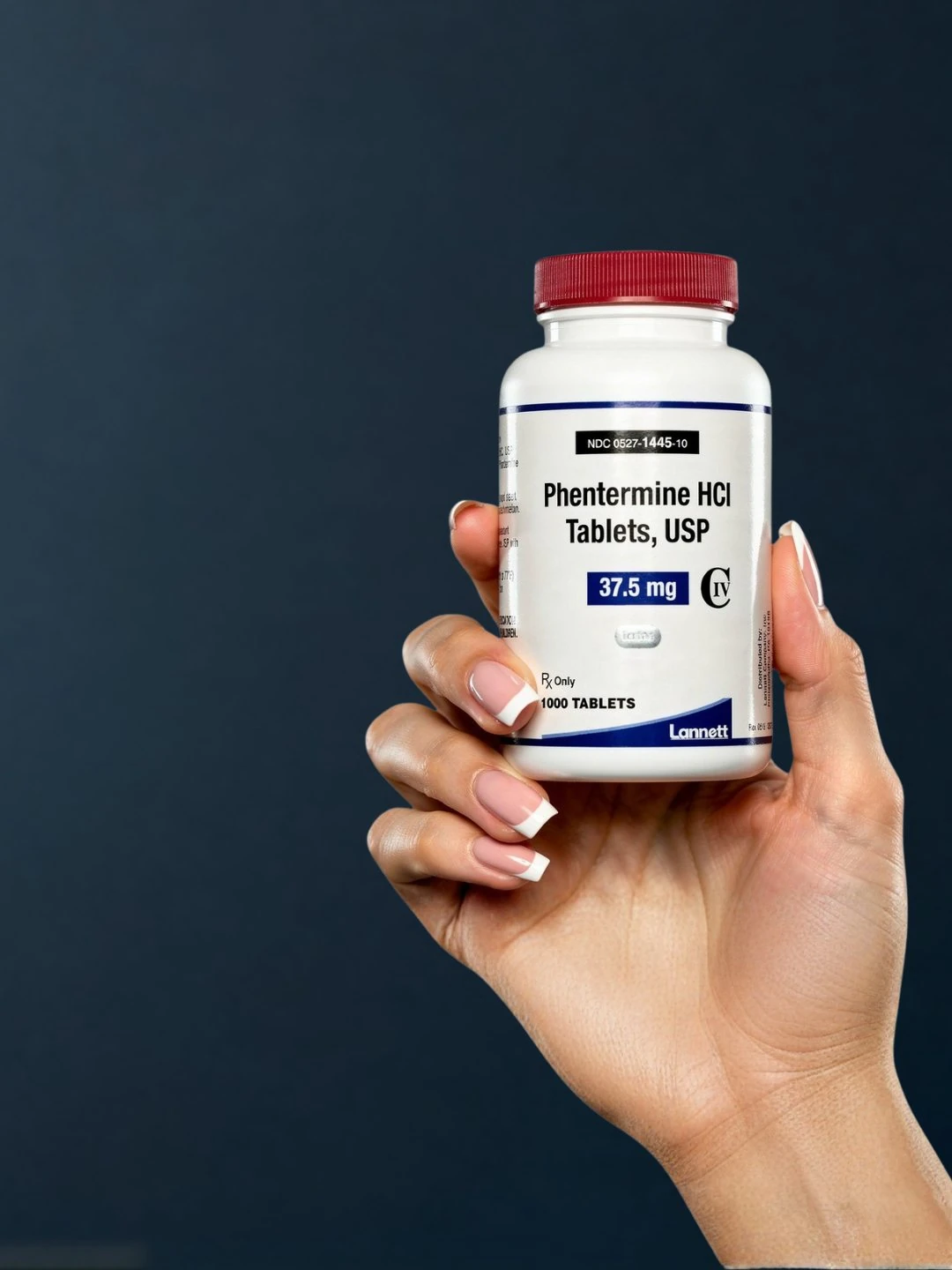
Phentermine is a sympathomimetic amine that works as a central nervous system stimulant to suppress appetite. It has been FDA-approved for weight loss since 1959, making it one of the longest-standing obesity medications available. At PEAK, phentermine is prescribed as part of a clinical treatment program — often as a first-line medication, a step therapy requirement, or in combination with GLP-1 medications.
Phentermine works differently from GLP-1 medications like Wegovy and Zepbound. Instead of mimicking gut hormones, phentermine stimulates the release of norepinephrine in the brain — a neurotransmitter that suppresses appetite and increases alertness and energy.
The effect is straightforward: you feel less hungry, you feel more energetic, and you eat less. Most patients notice a significant reduction in appetite within the first few days of treatment. Phentermine does not slow gastric emptying (the way GLP-1 medications do), so it doesn't typically cause the nausea and GI side effects associated with semaglutide or tirzepatide.
In clinical studies, patients taking phentermine alongside diet and exercise modifications lost an average of 5–7% of their body weight over 12 weeks. While this is less than what GLP-1 medications achieve over longer treatment courses, phentermine offers distinct advantages: it's an oral medication (no injections), it's widely available as a generic, and it's covered by many insurance plans.
At PEAK, phentermine is never prescribed as a quick fix. It's one tool within a structured clinical program that includes nutrition counseling, regular monitoring, and a clear plan for what comes next when the course is complete.
Phentermine is FDA-approved for short-term use in adults with a BMI of 30 or higher (obesity), or a BMI of 27 or higher with at least one weight-related condition such as type 2 diabetes, high blood pressure, or high cholesterol.
At PEAK, your clinician may recommend phentermine in several situations:
As a first-line treatment — for patients who haven't tried prescription weight loss medication before and want to start with an affordable, well-established option.
As a step therapy medication — many insurance plans require patients to try phentermine (or another non-GLP-1 medication) before approving coverage for Wegovy or Zepbound. PEAK prescribes phentermine, documents your response, and uses that documentation to support your GLP-1 prior authorization.
In combination with a GLP-1 — some patients benefit from adding phentermine alongside Wegovy or Zepbound when additional appetite suppression is needed, particularly during the early dose-escalation phase of GLP-1 treatment.
When GLP-1 medications aren't accessible — for patients whose insurance doesn't cover GLP-1s, or who prefer not to take injections, phentermine provides a clinically meaningful alternative at a fraction of the cost.
Phentermine is not appropriate for patients with a history of cardiovascular disease, uncontrolled hypertension, hyperthyroidism, glaucoma, or a history of drug abuse. It should not be taken with MAO inhibitors. Your clinician will review your full medical history during your consultation. Check your BMI.
Phentermine is one of the most common step therapy medications. If your insurer requires you to try a non-GLP-1 medication before approving Wegovy or Zepbound, phentermine is typically the first requirement. PEAK manages this process for you — prescribing phentermine, monitoring your progress, and building the documentation your insurer needs to approve the next step. Many patients see meaningful weight loss during the phentermine phase itself. Learn how step therapy works.
The most common side effects are dry mouth, insomnia (especially if taken too late in the day), increased heart rate, jitteriness or restlessness, and constipation. These are typically mild and tend to improve as your body adjusts. Because phentermine is a stimulant, it can raise blood pressure and heart rate — which is why PEAK monitors these metrics at every follow-up visit. Taking phentermine in the morning helps minimize sleep disruption.
Phentermine is FDA-approved for short-term use up to 12 weeks. At PEAK, your clinician will discuss the treatment timeline during your consultation and plan for what comes next — whether that's transitioning to a GLP-1 medication, continuing with behavioral and nutritional support, or adjusting the approach based on your response.
In some cases, yes. Combination therapy — using phentermine alongside a GLP-1 like Wegovy or Zepbound — can be clinically appropriate when one medication alone isn't producing sufficient results. The two medications work through completely different mechanisms (appetite suppression via norepinephrine vs. GLP-1 receptor activation), so they can complement each other. Your PEAK clinician will evaluate whether this approach is safe and appropriate for your situation.
Phentermine and GLP-1 medications work through entirely different mechanisms and produce different levels of weight loss. GLP-1 medications (15–22.5% body weight loss) are significantly more effective than phentermine (5–7%) over longer treatment courses. However, phentermine is oral (no injections), easier to access as a generic option, and covered by many insurance plans. Some patients start with phentermine and transition to GLP-1s. Others use both together. Read the full comparison.
Many commercial plans cover phentermine, and generic options can reduce out-of-pocket costs. PEAK accepts Anthem, Cigna, Aetna, UnitedHealthcare, Sentara, and TRICARE commercial plans, and does not accept Medicare or Medicaid plans. Visit pricing is $199 for the initial appointment, $135 for follow-up visits, and $75 for dietitian visits. View insurance and pricing details.
Phentermine is classified as a Schedule IV controlled substance, meaning it has a low but recognized potential for dependence. In practice, physical dependence at prescribed doses is rare. However, because it is a stimulant, it is not recommended for patients with a history of substance abuse. PEAK prescribes phentermine with appropriate clinical oversight, scheduled follow-up visits, and a clear treatment timeline.
Phentermine isn't the right fit for everyone. Your clinician will recommend the medication that makes the most sense for your health history, insurance, and goals.
GLP-1 receptor agonist with ~15% average body weight loss. Also approved to reduce cardiovascular risk. The most widely prescribed GLP-1 for weight loss.
Learn moreDual GIP/GLP-1 receptor agonist with the highest average weight loss of any approved anti-obesity medication. Available as pen or vial.
Learn moreFirst-generation GLP-1 for weight management. Daily injection with the longest GLP-1 track record. A good option when insurance favors liraglutide.
Learn moreDual-mechanism oral medication that reduces cravings and appetite. Particularly effective for patients with emotional or binge eating patterns.
Learn moreFDA guidelines, real-world prescribing practices, and what your clinician considers when determining how long to continue phentermine treatment.
Read the guideWhat phentermine costs with and without insurance, generic pricing, and how PEAK helps you manage coverage options.
Read the guide




Important safety information: Phentermine is a Schedule IV controlled substance approved for short-term use (typically 12 weeks or less). It is contraindicated in patients with cardiovascular disease, uncontrolled hypertension, hyperthyroidism, glaucoma, or history of drug abuse. Do not use with MAO inhibitors. Discuss your full medical history with your clinician before starting treatment.
Schedule a consultation with a PEAK clinician. We'll review your health history, check insurance coverage, and build a treatment plan around your goals.
Book NowNo referral needed • Most insurance accepted • Chesapeake, VA