Our Providers
 Paige Proctor, PA-CPhysician Assistant
 Christy Sorey, FNP-CNurse Practitioner
 Robyn Byrd, FNP-BCNurse Practitioner
 Samantha Marshall, FNP-BCNurse Practitioner
Book a consultation and we'll verify your insurance before your first visit.
Start Your JourneyOur providers match you to the best FDA-approved option based on your health profile.
Find Your MatchOur team helps you understand every option so you can decide with confidence.
Book NowBrowse our full library of evidence-based weight loss resources.
View All ResourcesKnow your coverage before your first visit. No surprises.
Check Your CoveragePaige Proctor, PA-CPhysician Assistant
Christy Sorey, FNP-CNurse Practitioner
Robyn Byrd, FNP-BCNurse Practitioner
Samantha Marshall, FNP-BCNurse Practitioner

A lipase inhibitor that blocks fat absorption in the gut. Available as prescription Xenical and over-the-counter Alli, orlistat takes a completely different approach to weight loss than appetite-suppressing medications.
FDA-approved since 1999 • Generic available • Non-systemic
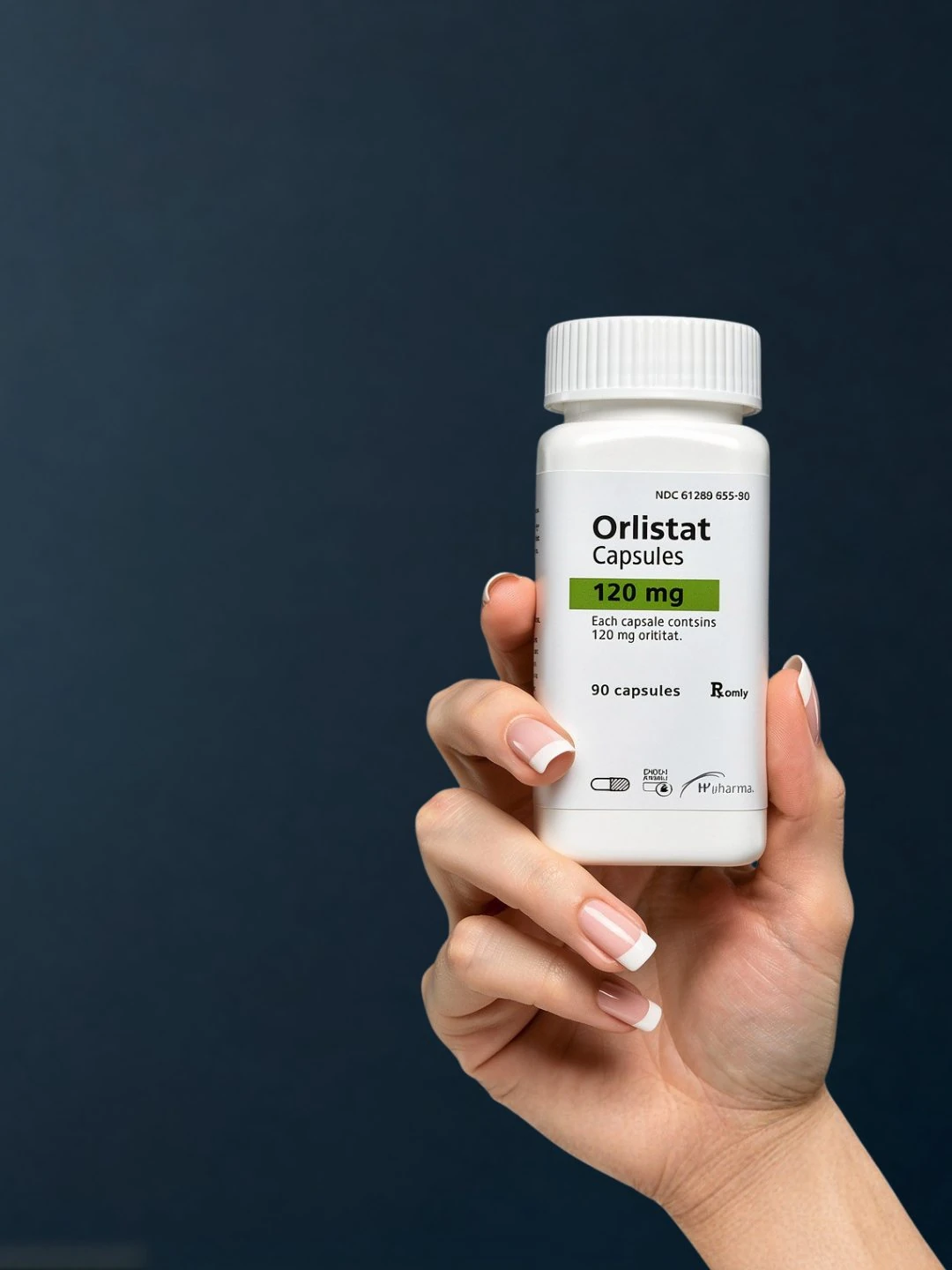
Orlistat is a lipase inhibitor that works entirely in the gut, blocking approximately 30% of dietary fat from being absorbed. Available as prescription Xenical (120 mg) and over-the-counter Alli (60 mg), it is one of the most affordable weight loss medication options. At PEAK, orlistat is prescribed in specific clinical scenarios — as a non-systemic alternative for patients who cannot take appetite suppressants, and as part of step therapy pathways toward GLP-1 approval.
Most weight loss medications work by suppressing appetite in the brain. Orlistat does not. Instead, it works entirely in the gut, blocking the enzyme your body uses to break down dietary fat.
Orlistat is a lipase inhibitor. When you eat a meal containing fat, your body releases pancreatic lipase — an enzyme that breaks dietary fat into smaller molecules so it can be absorbed through the intestinal wall. Orlistat binds to this enzyme and deactivates it, preventing approximately 30% of the fat you eat from being absorbed.
The unabsorbed fat passes through the gastrointestinal tract and is excreted. This is where orlistat’s distinctive side effect profile comes from — and why dietary compliance matters so much with this medication.
Unlike phentermine (which increases norepinephrine in the brain) or GLP-1 medications like Wegovy and Zepbound (which mimic gut hormones to reduce hunger), orlistat does not cross the blood-brain barrier and does not suppress appetite. It simply prevents a portion of dietary fat from being absorbed. No fat in a meal means no effect from the medication — it only works when you eat fat.
This mechanism means orlistat is a non-systemic medication. It acts locally in the gut and has minimal absorption into the bloodstream, which is a meaningful distinction for patients who prefer to avoid centrally acting medications or who have contraindications to appetite suppressants.
Orlistat is available in two forms: the prescription-strength brand Xenical and the over-the-counter version Alli. Both contain the same active ingredient but differ in dosage and access.
Alli offers a lower barrier to entry — patients can purchase it without a prescription and begin at the lower dose. Xenical requires a prescription but provides more potent fat-blocking at the higher dose. For patients working with a PEAK clinician, we typically prescribe Xenical when orlistat is part of the treatment plan, as the higher dose produces more meaningful results.
Orlistat is available as a generic medication in both the 120 mg prescription strength and the 60 mg OTC dose. This makes it one of the more affordable weight loss medication options, which is a practical consideration for many patients, especially when used as part of step therapy documentation.
Orlistat’s side effect profile is unlike any other weight loss medication. The gastrointestinal effects are the hallmark — and they are directly self-regulating. The more dietary fat you eat, the more pronounced the side effects become.
Orlistat’s GI side effects are not a design flaw — they are built-in dietary accountability. Eat within your fat budget and the side effects stay manageable.
These effects are directly proportional to fat intake. Eating a high-fat meal on orlistat will produce significant GI distress. This creates what some clinicians describe as “built-in accountability” — the medication effectively discourages high-fat eating through immediate, uncomfortable consequences. Most patients who follow a reduced-fat diet find the side effects manageable and decreasing over time.
Although uncommon, serious adverse effects have been reported. Liver injury is rare but has occurred — seek medical attention immediately if you notice dark urine, yellowing of the skin or eyes, or persistent abdominal pain. Kidney stones have also been reported in some patients. Your PEAK clinician will review your complete medical history before prescribing orlistat to assess your individual risk.
Orlistat is FDA-approved for patients with a BMI of 30 or greater, or 27 or greater with weight-related health conditions. It is not the right medication for every patient, and it is not typically our first recommendation. But there are specific clinical scenarios where it fills an important role:
Patients who prefer a non-systemic medication. Because orlistat does not cross the blood-brain barrier and acts locally in the gut, it is an option for patients who want to avoid centrally acting medications.
Step therapy documentation. Some insurance plans require documented trials of lower-cost medications before approving GLP-1s. Orlistat can serve as one of these documented steps.
Patients who cannot take appetite suppressants. Patients with cardiovascular contraindications to phentermine, or who cannot tolerate stimulant-based medications, may be candidates for orlistat as an alternative approach.
Patients willing to follow a reduced-fat diet. Orlistat works best — and its side effects are most manageable — when patients commit to a lower-fat dietary pattern. Compliance with the diet is essential for both efficacy and tolerability.
Patients who want an OTC starting point. The Alli (60 mg) formulation allows patients to begin orlistat without a prescription, which may be appropriate for some patients before they establish care with a clinician.
Like every weight loss medication, orlistat works best as part of a treatment plan that includes dietary changes, physical activity, and behavioral strategies. No medication replaces the fundamentals — it supports them.
Orlistat is commonly used in step therapy pathways. Many insurance plans require patients to try one or more lower-cost weight loss medications before they will approve coverage for GLP-1 medications like Wegovy or Zepbound. Orlistat, because it is FDA-approved, relatively inexpensive, and widely available, is accepted by many insurers as a qualifying step therapy medication. At PEAK, we manage this process strategically — prescribing orlistat, monitoring your response, documenting outcomes, and preparing the prior authorization for your target medication when the requirement is met. Learn how step therapy works.
We believe in being straightforward about every medication we prescribe. Orlistat is one tool among many, and it is not our first choice for most patients. GLP-1 medications and other options typically produce more significant results with a more favorable side effect profile for the majority of patients.
That said, orlistat fills specific niches that other medications do not. It is the only FDA-approved weight loss medication that works entirely outside the central nervous system. It is one of the most affordable options available. And it plays a meaningful role in step therapy pathways that help patients gain access to more effective medications through their insurance.
When we prescribe orlistat, it is always as part of a broader treatment plan — never as a standalone intervention. We set clear expectations about what orlistat can and cannot do, monitor your response, and adjust your plan as needed. If orlistat is a step on the path to a GLP-1, we manage that transition proactively so you are never left without a clear next step.
Every medication has a role when used for the right patient at the right time. Orlistat is no different — it is not the most powerful option, but it is a legitimate clinical tool in specific situations.
Xenical is prescription-strength orlistat at 120 mg, taken three times daily with meals. Alli is the over-the-counter version at half the dose (60 mg). Xenical blocks about 30% of dietary fat absorption, while Alli blocks approximately 25%. Both require a reduced-fat diet to minimize gastrointestinal side effects. Your PEAK clinician can help determine which formulation is appropriate for your situation.
Clinical trials show orlistat produces 5–7% body weight loss over 12 months when combined with a reduced-calorie, lower-fat diet. This is modest compared to GLP-1 medications (which can produce 15–22.5%) but still represents meaningful improvement in metabolic health markers including blood pressure, cholesterol, and blood sugar.
Orlistat’s side effects are primarily gastrointestinal — oily stools, flatulence with discharge, fecal urgency, and increased bowel movements. These effects are directly related to dietary fat intake and are manageable for most patients who follow a lower-fat diet. Rare but serious effects include liver injury and kidney stones. If you experience dark urine, yellowing skin, or persistent abdominal pain, contact your clinician immediately.
GLP-1 medications like Wegovy and Zepbound produce significantly more weight loss (15–22.5% of body weight) compared to orlistat (5–7%). They also work through completely different mechanisms — GLP-1s suppress appetite centrally, while orlistat blocks fat absorption locally in the gut. However, orlistat is non-systemic, far more affordable, and available over-the-counter as Alli. For many patients, orlistat serves as a step therapy medication on the path to GLP-1 coverage.
Yes. Many insurance plans require documented trials of lower-cost medications before approving GLP-1 coverage. Orlistat, because it is FDA-approved and inexpensive, is accepted by many insurers as a qualifying step therapy medication. At PEAK, we manage this process strategically — selecting medications that provide real clinical value during the step therapy period while building the documentation your insurer needs to approve the next step. Learn more about step therapy.
Orlistat can affect absorption of some medications, including certain thyroid medications, blood thinners (warfarin), and anti-seizure drugs. It also reduces absorption of fat-soluble vitamins (A, D, E, K), so a daily multivitamin taken at least two hours apart from orlistat is recommended. Your PEAK clinician will review all your current medications before prescribing orlistat to ensure safety and appropriate timing of doses.
GLP-1 receptor agonist with ~15% average body weight loss. Also approved to reduce cardiovascular risk. The most widely prescribed GLP-1 for weight loss.
Learn moreDual GIP/GLP-1 receptor agonist with the highest average weight loss of any approved anti-obesity medication. Available as pen or vial.
Learn moreSympathomimetic amine appetite suppressant. The most commonly prescribed weight loss medication in the U.S. Often used as first-line treatment or for step therapy.
Learn moreDual-mechanism oral medication that reduces cravings and appetite. Particularly effective for patients with emotional or binge eating patterns.
Learn moreFirst-generation GLP-1 for weight management. Daily injection with the longest GLP-1 track record. A good option when insurance favors liraglutide.
Learn more




Schedule a consultation with a PEAK clinician. We'll review your health history, check coverage for Anthem, Cigna, Aetna, UnitedHealthcare, Sentara or TRICARE commercial plans, and build a treatment plan around your goals. Medicare and Medicaid are not accepted.
Book NowNo referral needed • Most insurance accepted • Chesapeake, VA