Our Providers
 Paige Proctor, PA-CPhysician Assistant
 Christy Sorey, FNP-CNurse Practitioner
 Robyn Byrd, FNP-BCNurse Practitioner
 Samantha Marshall, FNP-BCNurse Practitioner
Book a consultation and we'll verify your insurance before your first visit.
Start Your JourneyOur providers match you to the best FDA-approved option based on your health profile.
Find Your MatchOur team helps you understand every option so you can decide with confidence.
Book NowBrowse our full library of evidence-based weight loss resources.
View All ResourcesKnow your coverage before your first visit. No surprises.
Check Your CoveragePaige Proctor, PA-CPhysician Assistant
Christy Sorey, FNP-CNurse Practitioner
Robyn Byrd, FNP-BCNurse Practitioner
Samantha Marshall, FNP-BCNurse Practitioner

A first-generation GLP-1 receptor agonist for chronic weight management. FDA-approved since December 2014 with the longest track record of any GLP-1 weight loss medication, prescribed at PEAK as part of a clinician-managed program.
Takes 2 minutes, no obligation
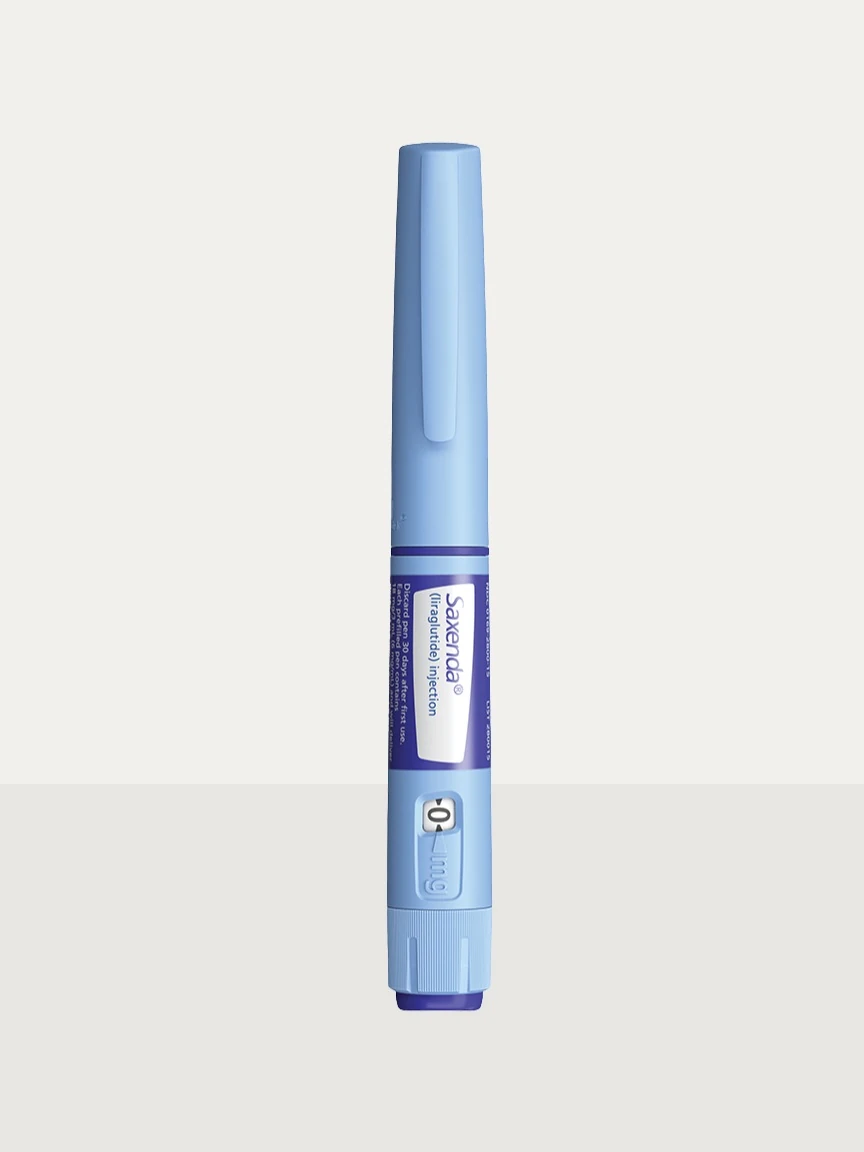
Saxenda is a GLP-1 receptor agonist that mimics the naturally occurring hormone GLP-1 to reduce appetite and promote satiety. Originally developed as Victoza for type 2 diabetes, liraglutide received a separate FDA approval for chronic weight management in 2014 at the higher 3.0 mg dose. At PEAK, Saxenda may be prescribed for patients who prefer a daily dosing schedule, those transitioning between GLP-1 medications, or when insurance formularies favor liraglutide over newer options.
Takes 2 minutes, no obligation
In rodent studies, liraglutide caused thyroid C-cell tumors at clinically relevant doses. It is unknown whether Saxenda causes thyroid C-cell tumors, including medullary thyroid carcinoma (MTC), in humans.
Saxenda is contraindicated in patients with a personal or family history of MTC or in patients with Multiple Endocrine Neoplasia syndrome type 2 (MEN2).
Other important risks include pancreatitis, gallbladder disease, increased heart rate, and kidney problems. See the full prescribing information.
Saxenda belongs to the same class of medications as Wegovy — GLP-1 receptor agonists. GLP-1 (glucagon-like peptide-1) is a hormone your body produces naturally after eating. It signals your brain that you're full, slows gastric emptying, and helps regulate blood sugar. Liraglutide mimics this hormone at a therapeutic dose.
When you take Saxenda, you feel full sooner, stay satisfied longer, and experience a meaningful reduction in appetite. This isn't about willpower — it's about changing the hormonal signals that drive hunger and cravings. Many patients describe a quieting of persistent "food noise" that made weight management so difficult before medication.
The key difference between Saxenda and newer GLP-1 medications like Wegovy is dosing frequency. Saxenda is injected once daily, while Wegovy is a once-weekly injection. Liraglutide has a shorter half-life (approximately 13 hours vs. 7 days for semaglutide), which means it clears the body more quickly. This can be an advantage for patients who want more control over side effects — if nausea occurs, it typically resolves within hours rather than days.
At PEAK, Saxenda is prescribed as part of a clinical program that includes dietitian-led nutrition counseling, regular clinician check-ins, and ongoing monitoring. The medication is one tool within a broader treatment strategy built for lasting results.
Saxenda's effectiveness was demonstrated in the SCALE clinical trial program — a series of large studies.
In the SCALE Obesity and Prediabetes trial, adults without diabetes taking liraglutide 3.0 mg lost an average of 8% of their body weight over 56 weeks, compared to 2.6% with placebo. More than one-third of participants lost at least 10% of their body weight.
In the SCALE Diabetes trial, patients with type 2 diabetes lost an average of 6% of their body weight, with meaningful improvements in blood sugar control. HbA1c levels dropped significantly, and many patients were able to reduce their diabetes medications.
A three-year follow-up study showed that patients who continued liraglutide maintained weight loss and had a 66% lower rate of developing type 2 diabetes compared to placebo — demonstrating that Saxenda has benefits beyond the scale.
While the average weight loss with Saxenda is more modest than what newer GLP-1 medications like Wegovy (15%) or Zepbound (up to 22.5%) achieve, 8% body weight loss still produces clinically meaningful improvements in blood pressure, cholesterol, blood sugar, and overall cardiovascular risk.
Saxenda uses a gradual dose-escalation schedule to reduce side effects and let your body adjust. Here's the standard framework:
| Timeframe | Daily Dose |
|---|---|
| Week 1 | 0.6 mg |
| Week 2 | 1.2 mg |
| Week 3 | 1.8 mg |
| Week 4 | 2.4 mg |
| Week 5+ | 3.0 mg (maintenance) |
This schedule is a starting framework — not a rigid prescription. Your PEAK clinician adjusts the pace based on how you respond. Some patients move through dose increases faster, while others stay at a lower dose longer if side effects need time to resolve. If the 3.0 mg dose is not tolerated, your clinician may reduce to 2.4 mg and reassess.
Saxenda comes in a prefilled multi-dose pen that contains 18 mg of liraglutide (enough for multiple doses). You select your dose using the pen's dial and inject once daily at any time — though taking it at the same time each day helps build a consistent routine. The needle is small and the injection is generally well-tolerated.
Saxenda is FDA-approved for adults with a BMI of 30 or higher (obesity), or a BMI of 27 or higher with at least one weight-related condition such as type 2 diabetes, high blood pressure, or high cholesterol. It is also approved for adolescents ages 12–17 with obesity.
At PEAK, your clinician may recommend Saxenda in several situations:
When insurance formularies favor liraglutide — some insurance plans cover Saxenda but not Wegovy or Zepbound, or place Saxenda at a lower formulary tier with a lower copay. In these cases, Saxenda provides GLP-1 treatment at a more accessible price point.
For patients who prefer daily dosing — some patients prefer the routine of a daily injection over a weekly one. The shorter half-life also means side effects tend to resolve more quickly if they occur.
As a bridge or transition medication — Saxenda can serve as a starting GLP-1 while waiting for prior authorization on a newer medication, or as a step-down option for patients transitioning off a weekly GLP-1.
When newer GLP-1s are not tolerated — some patients experience persistent side effects on semaglutide or tirzepatide that don't resolve with dose adjustments. Liraglutide's different pharmacokinetic profile may be better tolerated.
Saxenda is not appropriate for patients with a personal or family history of medullary thyroid carcinoma (MTC) or Multiple Endocrine Neoplasia syndrome type 2 (MEN2), a history of pancreatitis, or who are pregnant or breastfeeding. Your clinician will review your full medical history during your consultation. Check your BMI.
How does Saxenda compare to Wegovy? Both are GLP-1 receptor agonists made by Novo Nordisk, but they use different active ingredients. Wegovy (semaglutide) is a once-weekly injection that produces higher average weight loss (~15% vs. ~8%), while Saxenda (liraglutide) is a daily injection with a longer safety track record. The best choice depends on your insurance coverage, tolerance for side effects, and personal preferences. Your PEAK clinician will help you determine which GLP-1 is the right fit. Compare all medications.
The most common side effects are gastrointestinal: nausea (about 39% in trials), diarrhea (about 21%), constipation (about 19%), vomiting (about 16%), and decreased appetite. These are typically mild to moderate and tend to improve as your body adjusts during the dose-escalation period. Eating smaller meals, avoiding fatty foods, and staying hydrated can help manage these effects. Because Saxenda is a daily injection with a shorter half-life, side effects that do occur typically resolve within hours rather than lingering for days. Your clinician will monitor for any side effects and adjust your treatment plan as needed.
All three are injectable GLP-1 receptor agonists FDA-approved for weight loss, but they differ in key ways. Saxenda (liraglutide) is a daily injection with ~8% average body weight loss. Wegovy (semaglutide) is a weekly injection with ~15% average weight loss. Zepbound (tirzepatide) is a weekly dual GIP/GLP-1 injection with up to ~22.5% weight loss. Saxenda has the longest FDA track record (approved 2014) and may be preferred when insurance covers it favorably or when patients prefer daily dosing. See the full comparison.
Many commercial insurance plans cover Saxenda for weight management, though coverage varies by plan. Some insurers that don't cover Wegovy or Zepbound may still cover Saxenda, making it an important coverage alternative. PEAK accepts Anthem, Cigna, Aetna, UnitedHealthcare, Sentara, and TRICARE commercial plans, and does not accept Medicare or Medicaid plans. PEAK handles the prior authorization process and will confirm coverage before you begin treatment. Visit pricing is $199 for the initial appointment, $135 for follow-up visits, and $75 for dietitian visits. View our full insurance and pricing information.
Saxenda and Victoza both contain liraglutide and are made by Novo Nordisk, but they are FDA-approved for different uses and dosed differently. Victoza is approved for type 2 diabetes at a maximum dose of 1.8 mg daily, while Saxenda is approved for chronic weight management at 3.0 mg daily — a higher dose designed to produce the weight loss results seen in the SCALE clinical trials. At PEAK, we prescribe Saxenda (not Victoza) for weight management to ensure patients receive the correct dose and the cleanest path to insurance approval.
Saxenda is approved for long-term use in chronic weight management. Treatment duration varies by individual — some patients continue indefinitely for sustained weight management, while others may eventually transition to a different medication or taper off if they've developed strong nutritional and behavioral habits. Research shows that weight regain is common when GLP-1 medications are discontinued without ongoing support, which is why PEAK's program emphasizes building lasting habits alongside medication. Your clinician will regularly assess whether Saxenda remains the right fit or if transitioning to a different treatment makes more sense.
Yes. Like all GLP-1 receptor agonists, Saxenda carries a boxed warning about thyroid C-cell tumors observed in animal studies. Liraglutide caused thyroid tumors in rodents at clinically relevant doses. It is unknown whether this occurs in humans. Saxenda is not recommended for people with a personal or family history of medullary thyroid carcinoma (MTC) or Multiple Endocrine Neoplasia syndrome type 2 (MEN2). Less common but important risks include pancreatitis (rare but serious), gallstones (more common with weight loss), increased heart rate, and kidney problems. Your provider will review your medical history to ensure Saxenda is appropriate for you.
Saxenda isn't the right fit for everyone. Your clinician will recommend the medication that makes the most sense for your health history, insurance, and goals.
GLP-1 receptor agonist with ~15% average body weight loss. Also approved to reduce cardiovascular risk. The most widely prescribed GLP-1 for weight loss.
Learn moreDual GIP/GLP-1 receptor agonist with the highest average weight loss of any approved anti-obesity medication. Available as pen or vial.
Learn moreThe most commonly prescribed weight loss medication in the U.S. An oral appetite suppressant with widely available generic options.
Learn more




Boxed warning — thyroid C-cell tumors: In rodent studies, liraglutide caused thyroid C-cell tumors. Saxenda is contraindicated in patients with a personal or family history of medullary thyroid carcinoma (MTC) or Multiple Endocrine Neoplasia syndrome type 2 (MEN2). Other important risks include pancreatitis, gallbladder disease, increased heart rate, and kidney problems. See the full prescribing information.
Schedule a consultation with a PEAK clinician. We'll review your health history, check insurance coverage, and build a treatment plan around your goals.
Book NowNo referral needed • Most insurance accepted • Chesapeake, VA