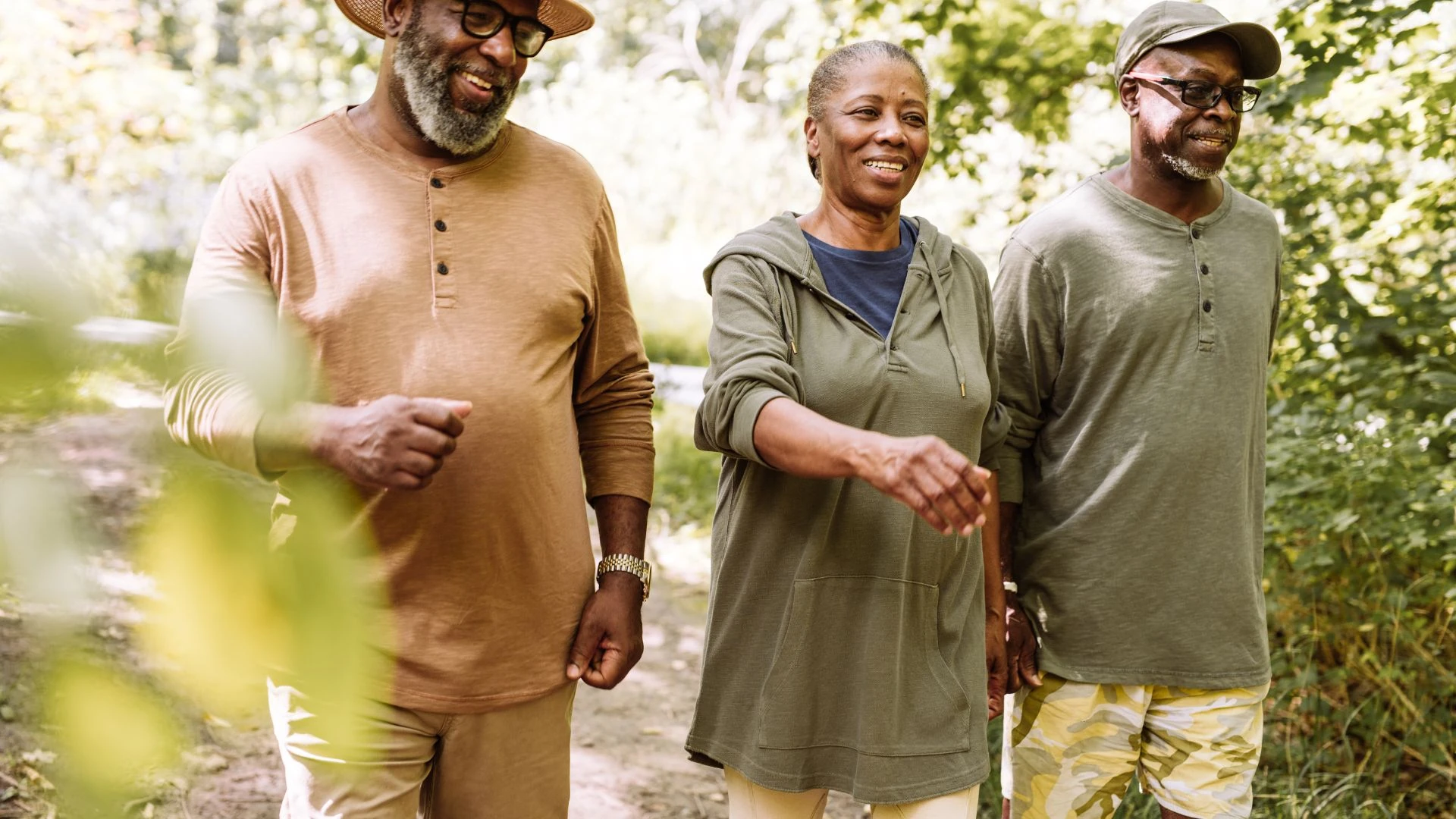
- Walking is the most accessible and sustainable form of exercise for weight loss
- Post-meal walks can help with GLP-1 side effects like mild nausea and constipation
- Start with 10–15 minutes daily and build gradually toward 150 minutes per week
- Pair walking with strength training for optimal body composition results
When patients start a weight loss program, they often ask what exercise they should be doing. The answer surprises many of them: walking. Not a gym membership, not a HIIT class, not a complicated routine that requires equipment and motivation you do not have yet. Walking.
It is the most underutilized tool in weight management, and it is available to almost everyone, almost anywhere, with zero cost and zero learning curve. Here is why walking works, how much to do, and how to make it a lasting part of your routine — especially if you are on GLP-1 medication.
The most underrated exercise
Walking does not get the respect it deserves because it does not feel dramatic. There are no before-and-after transformation videos featuring someone who walked for 20 minutes a day. But the research is clear: regular walking is one of the most effective forms of physical activity for long-term weight management and overall health.
Here is why walking works so well, particularly for patients in a medical weight loss program:
- It is accessible. You do not need a gym, equipment, or athletic experience. If you can get out of your chair, you can walk.
- It is low-impact. Unlike running, jumping, or high-intensity workouts, walking is gentle on your joints. This matters especially at higher body weights, where high-impact exercise can cause pain and injury.
- It is sustainable. The best exercise is the one you actually do consistently. Walking has the highest long-term adherence rate of any form of exercise because the barrier to starting is almost zero.
- It burns more calories than you think. A 200-pound person walking at a moderate pace for 30 minutes burns approximately 150–200 calories. Over a week, that adds up. Over months, it is significant.
- It does not require recovery. You can walk every single day without worrying about overtraining, muscle soreness, or needing rest days. This makes it the ideal daily baseline activity.
The best exercise program is one you will actually follow. For most patients, walking is the foundation everything else is built on.
Benefits beyond calories
Calorie burn is only part of the picture. Walking provides a range of health benefits that directly support weight loss and overall well-being:
- Cardiovascular health. Regular walking lowers blood pressure, improves cholesterol levels, and reduces the risk of heart disease. Even moderate-paced walking strengthens the heart and improves circulation.
- Mood improvement. Walking triggers the release of endorphins and reduces cortisol. Patients who walk regularly report lower stress, less anxiety, and better emotional regulation — all of which reduce emotional eating.
- GI motility. Walking promotes healthy digestion and regular bowel movements. This is particularly relevant for patients on GLP-1 medications, where constipation and sluggish digestion are common side effects.
- Sleep quality. Regular physical activity, even light walking, improves both the duration and quality of sleep. Better sleep supports healthy hormone levels, including those that regulate hunger and satiety.
- Joint-friendly movement. Walking lubricates joints, strengthens the muscles around them, and can actually reduce joint pain over time — the opposite of what many patients fear.
A short walk after meals can help blunt post-meal blood sugar spikes. For patients on GLP-1 medications, which already improve blood sugar regulation, post-meal walking provides an additional layer of metabolic benefit.
How much to walk
The biggest mistake people make with walking is trying to do too much too soon. If you are currently sedentary, a 45-minute walk on day one is likely to leave you sore, discouraged, or both. The goal is gradual, sustainable progression.
Starting out
If you are not currently active, start with 10–15 minutes of walking per day. That is it. This can be one short walk or two even shorter ones. The point is to establish the habit before increasing the volume.
Building up
Once 10–15 minutes feels comfortable (usually within 1–2 weeks), add 5 minutes per session. Continue increasing gradually until you reach 30 or more minutes of walking most days of the week.
Starting point: 10–15 minutes daily (70–105 minutes per week)
Intermediate: 20–30 minutes daily (140–210 minutes per week)
General target: 150 minutes of moderate walking per week, spread across most days
Advanced: 200–300 minutes per week for additional weight loss benefit
What about step counts?
Step counting can be a useful motivational tool, but the 10,000-steps-per-day target is arbitrary — it originated from a Japanese marketing campaign, not from clinical research. A more evidence-based approach:
- Find your current daily average over a normal week (most phones track this automatically).
- Add 1,000–2,000 steps per day to that baseline.
- Once that feels easy, add another 1,000–2,000 steps.
- Continue until you reach a level that fits sustainably into your life.
For most patients, landing somewhere between 7,000 and 10,000 steps per day is a realistic, health-promoting range. But 5,000 consistent daily steps is far better than 10,000 steps twice a week.
Walking on GLP-1 medication
If you are taking a GLP-1 medication like semaglutide or tirzepatide, walking is an especially valuable form of exercise. It pairs well with the medication in several specific ways:
- Helps with mild nausea. Gentle movement promotes gastric motility, which can ease the nausea that some patients experience during dose titration. Many patients find that a short walk after meals reduces nausea more effectively than sitting still.
- Reduces constipation. GLP-1 medications slow gastric emptying, which can contribute to constipation. Regular walking stimulates the digestive system and promotes regular bowel movements.
- Supports hydration. Walking reminds you to drink water. Carry a water bottle and sip throughout your walk — hydration is critical on GLP-1 medications and helps prevent both nausea and constipation.
On days when GLP-1 side effects are more pronounced — significant nausea, vomiting, or fatigue — do not force a walk. Rest, hydrate, and try again when you feel better. Pushing through severe symptoms does not build resilience; it builds aversion. The goal is consistency over weeks and months, not perfection every single day.
Making it a habit
Knowing that walking is good for you is easy. Actually walking every day is the challenge. The patients who succeed are the ones who attach walking to existing routines rather than treating it as a separate task to remember.
Strategies that work:
- Morning walks. Walk first thing in the morning, before the day gets complicated. Even 10–15 minutes sets a positive tone and establishes the habit before decision fatigue kicks in.
- Post-meal walks. A 10–15 minute walk after lunch or dinner aids digestion, helps with blood sugar regulation, and is easy to remember because it is anchored to something you already do every day.
- Walking meetings. If your work involves phone calls or one-on-one meetings, take them while walking. You cover your steps and your agenda at the same time.
- Parking farther away. This is a small change that adds up. Park at the far end of the lot. Take the stairs instead of the elevator for one or two floors. These micro-walks accumulate throughout the day.
- Walking with someone. A walking partner provides accountability. You are less likely to skip a walk when someone is waiting for you.
Consistency beats intensity. A 15-minute daily walk you actually do is worth more than a 60-minute walk you keep putting off.
The most important principle is this: do not wait for motivation. Motivation follows action, not the other way around. Put your shoes on, walk out the door, and start. You will almost never regret it once you begin.
Progressing over time
Once walking is an established habit, you can make it more challenging — if you want to. Progression should feel natural, not forced. Here are options in order of priority:
Increase duration before intensity
Before you walk faster or harder, walk longer. Going from 15 minutes to 20, then 25, then 30 is a low-risk progression that builds aerobic capacity without increasing injury risk.
Add inclines
Walking uphill or on an inclined treadmill significantly increases the intensity without the impact of running. Hills engage your glutes, hamstrings, and calves more than flat walking and burn more calories per minute.
Try intervals
Alternate between a normal walking pace and a brisk pace every few minutes. For example: walk at a comfortable pace for 3 minutes, then walk briskly for 1 minute. Repeat. This increases your heart rate, improves cardiovascular fitness, and adds variety without requiring you to run.
Add arm movements or light weights
Swinging your arms purposefully while walking engages your upper body and increases calorie burn slightly. Some patients carry light hand weights (1–3 pounds) during walks. This is optional and should only be added once your base walking habit is well-established.
Weeks 1–2: Establish the habit. 10–15 minutes daily at a comfortable pace.
Weeks 3–4: Increase to 20–25 minutes. Slightly brisker pace.
Weeks 5–8: Work toward 30 minutes most days. Add hills or inclines once a week.
Week 9+: Experiment with intervals, longer walks on weekends, or walking with light weights.
Walking and muscle preservation
Walking is excellent for cardiovascular health, mood, digestion, and weight management. But there is one thing it cannot do on its own: preserve lean muscle mass during weight loss.
When you lose weight — whether through medication, diet, or both — you lose a combination of fat and muscle. Without resistance training, up to 25–30% of the weight lost can be lean tissue. This matters because muscle mass drives your metabolic rate. Less muscle means a slower metabolism, which makes weight regain more likely.
Walking is a cardiovascular activity. It does not provide the stimulus your muscles need to maintain their size and strength during a caloric deficit. For that, you need resistance training — exercises that challenge your muscles against external resistance, like bodyweight exercises, resistance bands, or weight lifting.
Walking: Daily or near-daily, 20–30+ minutes. Provides cardiovascular benefit, aids digestion, supports mood, and contributes to calorie expenditure.
Resistance training: 2–3 sessions per week, targeting major muscle groups. Preserves lean mass, supports metabolic rate, and improves body composition.
Together, walking and strength training produce significantly better outcomes than either one alone.
At PEAK, we help every patient build a movement plan that includes both walking and resistance training, scaled to their current fitness level. You do not need to figure it out alone.